-
1) The day of surgery, you will likely go home and should rest. You will not be able to breathe through your nose this first night due to the nasal packing. Take pain medications as needed. Rest with your head elevated if that is comfortable for you. Rest in a position that won't result in trauma to your nose. Don't put anything on top of your nose including ice, as it can shift the position of your nose and compromise your result.
-
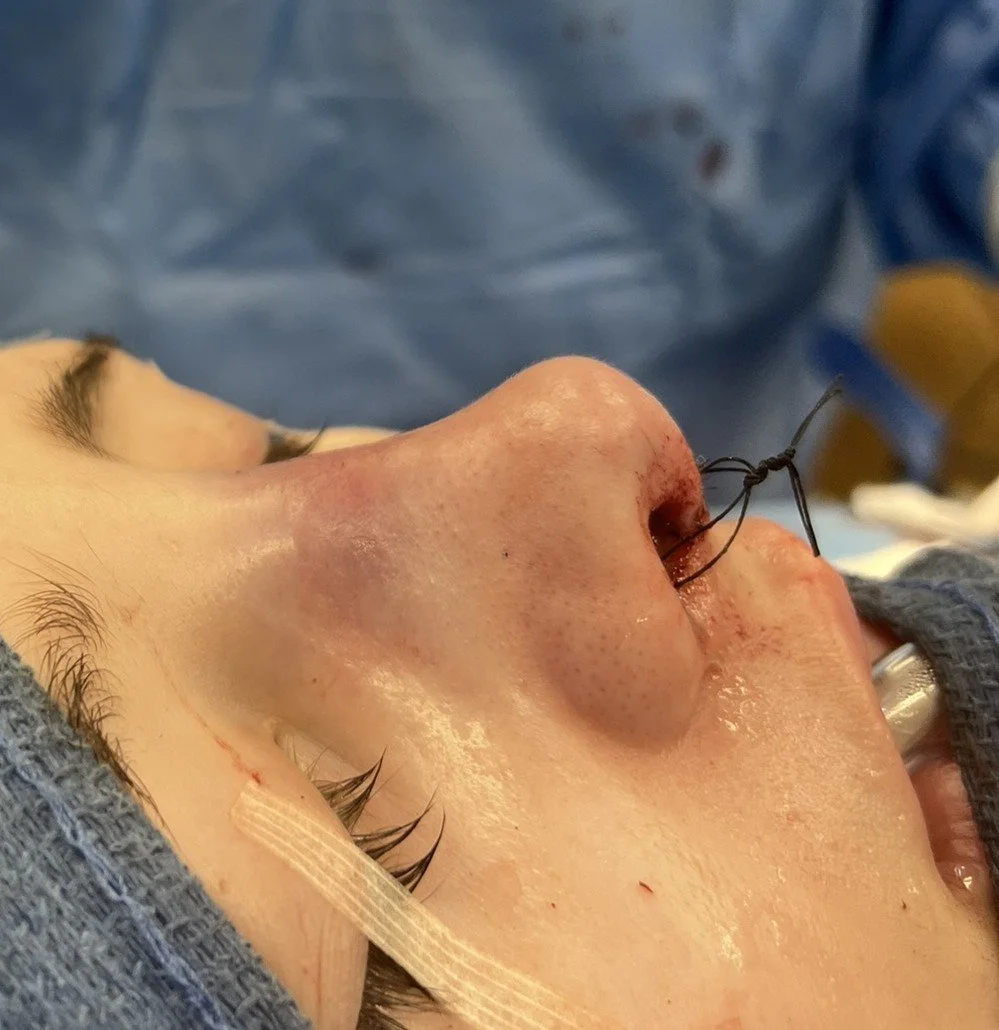
2) The day after surgery: gently pull on the black strings to remove the small telfa packing in the nose (one inside each nostril). Squirt nasal saline into the nostrils if you feel any resistance to loosen things up.
-
3) The day after surgery you will continue taking pain medication, and likely will start taking a steroid pill and antibiotic. Apply ointment in front of your nostrils and at the base of your nose twice a day to keep the incisions clean and moist, and squirt nasal saline in your nose at least 5 times a day in this first week.
-
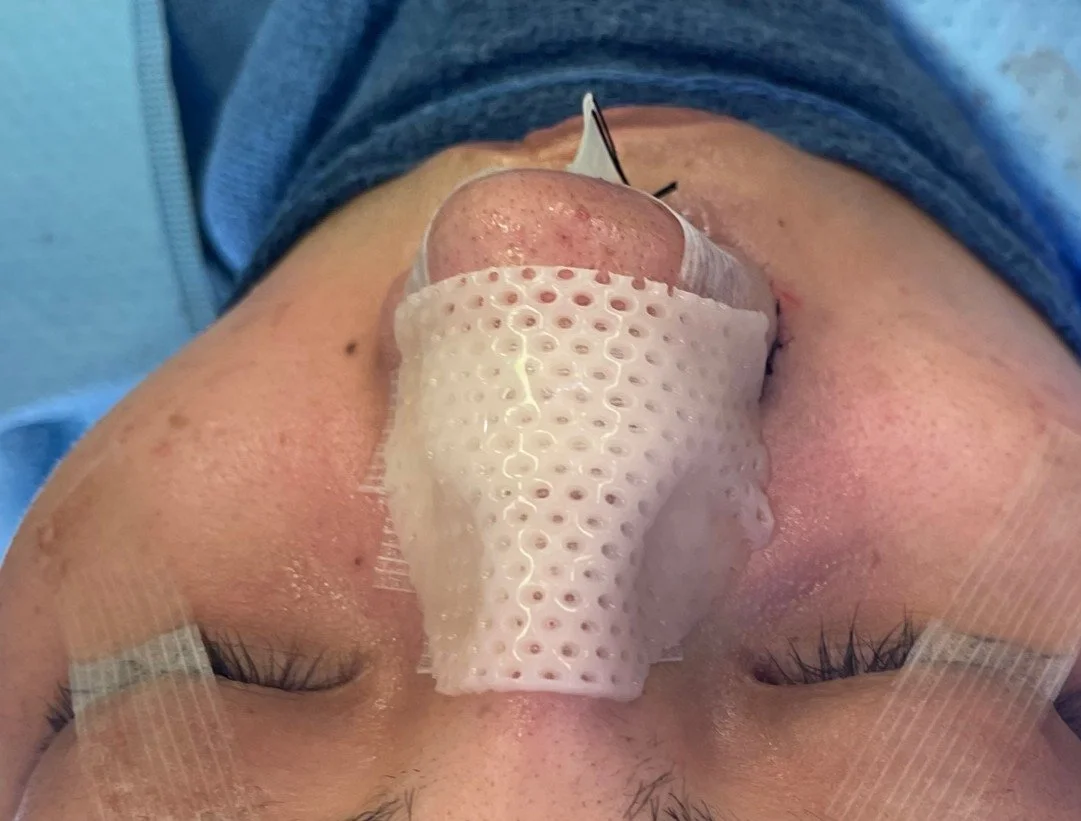
External nasal cast and tape, as well as external nasal sutures will be removed 6-8 days after surgery in Dr. Brennan's office. (Typically any internal/septal splints will also be removed at that visit.)
-
Take it easy for 2 weeks after surgery. Walking is ok, but anything that gets the heart rate too elevated or involves straining can cause bleeding in the nose which can result in a complication. Keeping the head elevated after surgery is helpful to reduce swelling and postnasal drainage but not required if it's uncomfortable for you.
-
Nasal precautions and care: in the first 4-6 weeks after surgery, it is important to avoid any internal nasal trauma. This includes nose blowing or picking. Keeping the inside of the nose moist with nasal saline and ointment (vaseline, bacitracin) is important for healing.
-
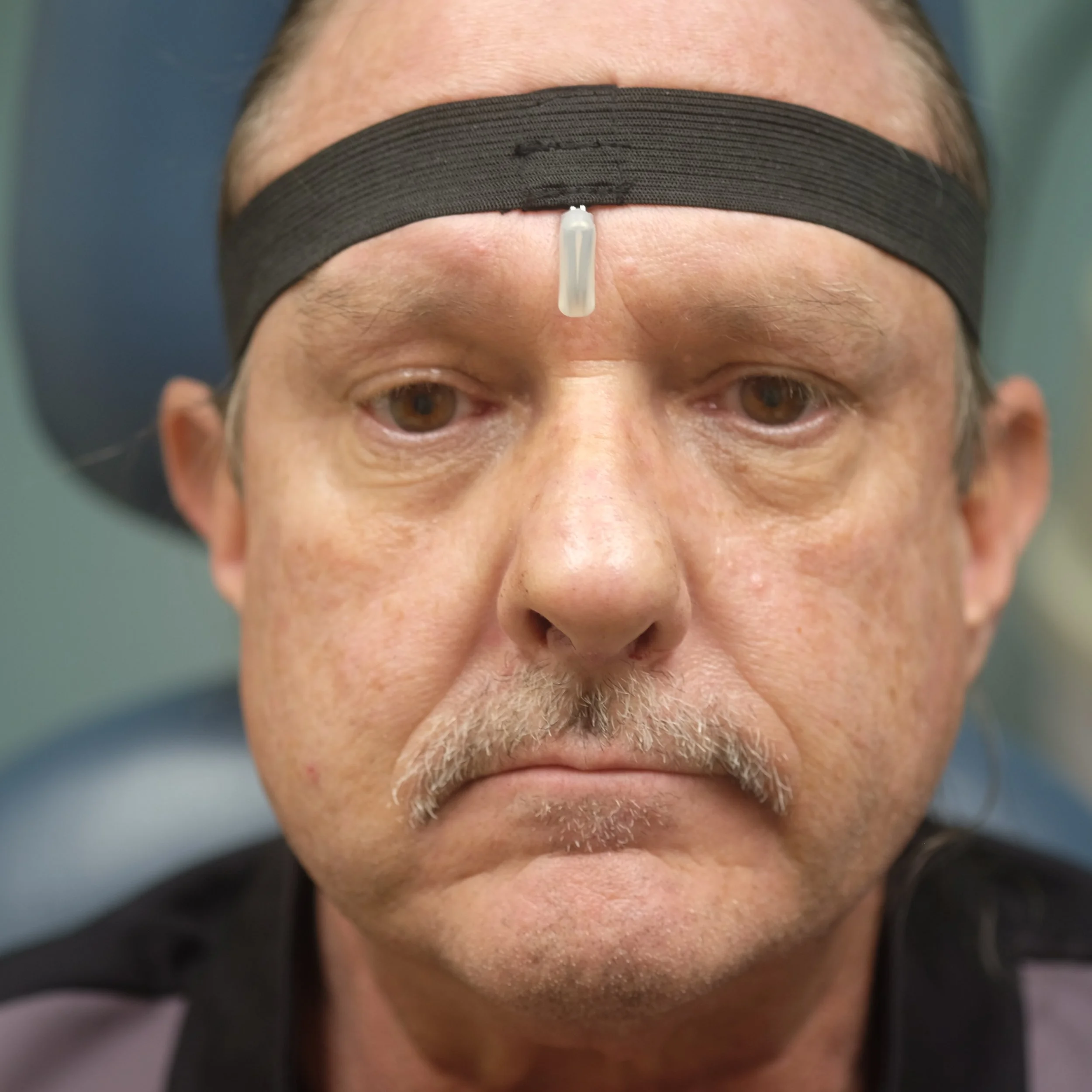
This type of "rhinoplasty glasses holder" is helpful for the first month after surgery for patients who wear glasses (and can't wear contacts, for example), as your glasses can rest on the hook without touching your nose. In the first 4-6 weeks after surgery, it is important to avoid touching/manipulating/putting pressure of any kind on your nose to optimize healing.